I first learned and interacted with additive manufacturing when I was doing my second internship and had to 3D print an enclosure to house a continuity sensor. This sensor was to ensure that a piece of equipment was to remain closed during testing to prevent accidents from occuring.
Fast forwarding 3 years and I once again ran in to 3D printing to help aid in development. I was in Formula SAE ( I have a separate page about this) and was in the design phase for adjustable differential carriers. After I had designed the differential carriers and it had gotten approval for them to be machined, there was 2-3 week time gap from the manufacturing team on machining the part because they were finishing other parts. Due to the wait period, I was told to use the FDM 3D printer ( Creality CR-10) to print a 1:1 model of the differential carriers, I did this so that I could waterjet the tabs that pin the differential carriers and tack the tabs on the supporting members while the printed model was in position of the real differential carrier. This ensured that progress was containing to be made on the car using the technology we had available to us.
At the time, I did not understand much of the hardware, software, or settings involved to print the carriers so I had to get help. After getting help and printing my models, I realized that learning what the hardware, software, and settings were doing was extremely important due to the large and rapid rise of additive manufacturing. This led me to conclude that being able to truly utilize your machine is key to improving your manufacturing process. Since this realization I knew that I needed to master this skill and in order for me to do this I had decided to invest in my self by investing in a FDM 3D printer for me to learn on. Due to my budget and tons of research, I chose the Creality Ender 3 due to its reliability, print quality, build volume, and price.
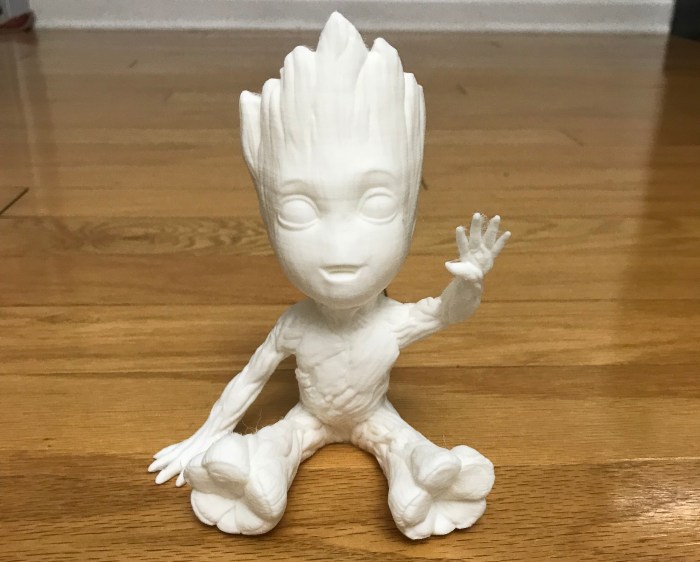
An example of how far I come in my printing abilities can be shown with the featured page picture of baby Groot from the movie Guardians of the Galaxy’s. Groot was printed at a .12mm layer height and was printed without any supports. Overall the print was nearly perfect aside from the slight stringing that occurred between his fingers on his right hand.
After nearly a year of having this printer I have learned an immense amount about my machine, the printing process as a whole, and an even greater appreciation of this growing field. There truly is just so much happening in the space and learning and trying those things on my own has been an absolute blast. I have printed a ton more and have pictures down below. Drop a comment and let me know what you think!

 Kaif Dosani